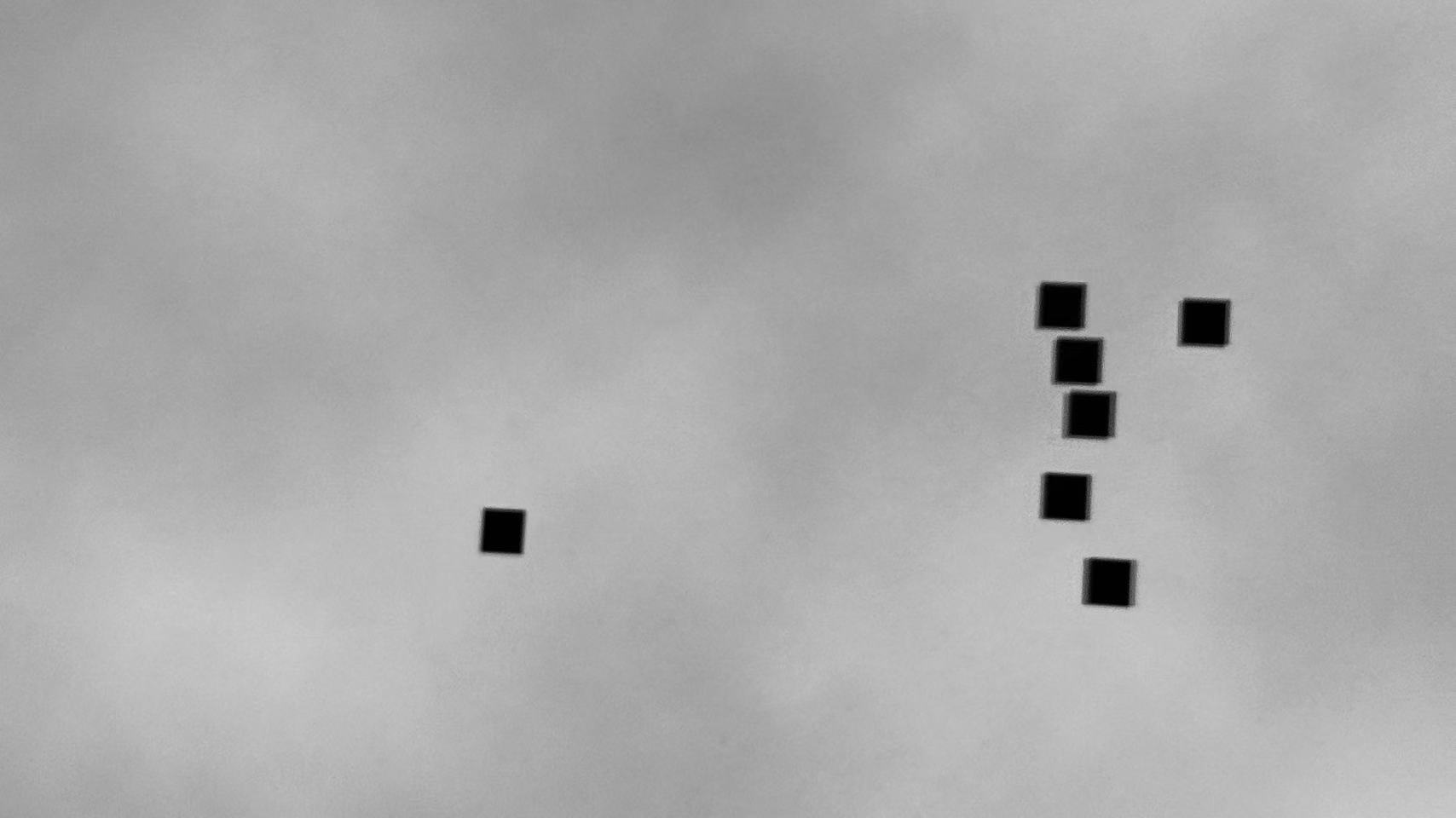
Jordan Magnuson’s Loneliness (2011) is regarded as a typical example of the “game poem”: a form of interactive work that prioritizes emotional expression over traditional gameplay complexity. Through extreme minimalism in both mechanics and aesthetics, Loneliness demonstrates how interactive systems can evoke nuanced emotional states such as isolation, alienation, and emotional distance using only the most fundamental elements of play.
The game’s core interaction is limited to movement. The player controls a single square navigating an abstract space populated by other square clusters. These surrounding forms initially appear to move together in recognizable groupings, but as the player approaches, they gradually disperse and drift away.
From a psychological and experiential perspective, this design is particularly relevant to the lived experiences of highly sensitive individuals (HSPs) and individuals on the autism spectrum, for whom loneliness and being misunderstood often emerge not from explicit rejection, but from subtle, repeated failures of connection. Research on both sensory-processing sensitivity and autism spectrum traits highlights differences in social perception, emotional processing, and environmental interpretation, often resulting in feelings of social misalignment rather than overt conflict.
Importantly, Loneliness avoids traditional failure states, goals, or progression systems. There is no “solution” to the player’s isolation, and no mastery that resolves the central emotional tension. This aligns with the reality of chronic loneliness as experienced by many neurodivergent individuals: it is often persistent, situational, and resistant to simple resolution. The game’s brevity reinforces this point: Loneliness does not attempt to exhaustively explore its theme, but instead captures a single emotional truth with precision and restraint.
Inspired by Loneliness, this project adopts a similar poetic design philosophy, treating gameplay as an expressive medium rather than a problem-solving structure. The focus lies in allowing players to recognize and inhabit an emotional state that is often underrepresented or simplified in games.
Leave a Reply