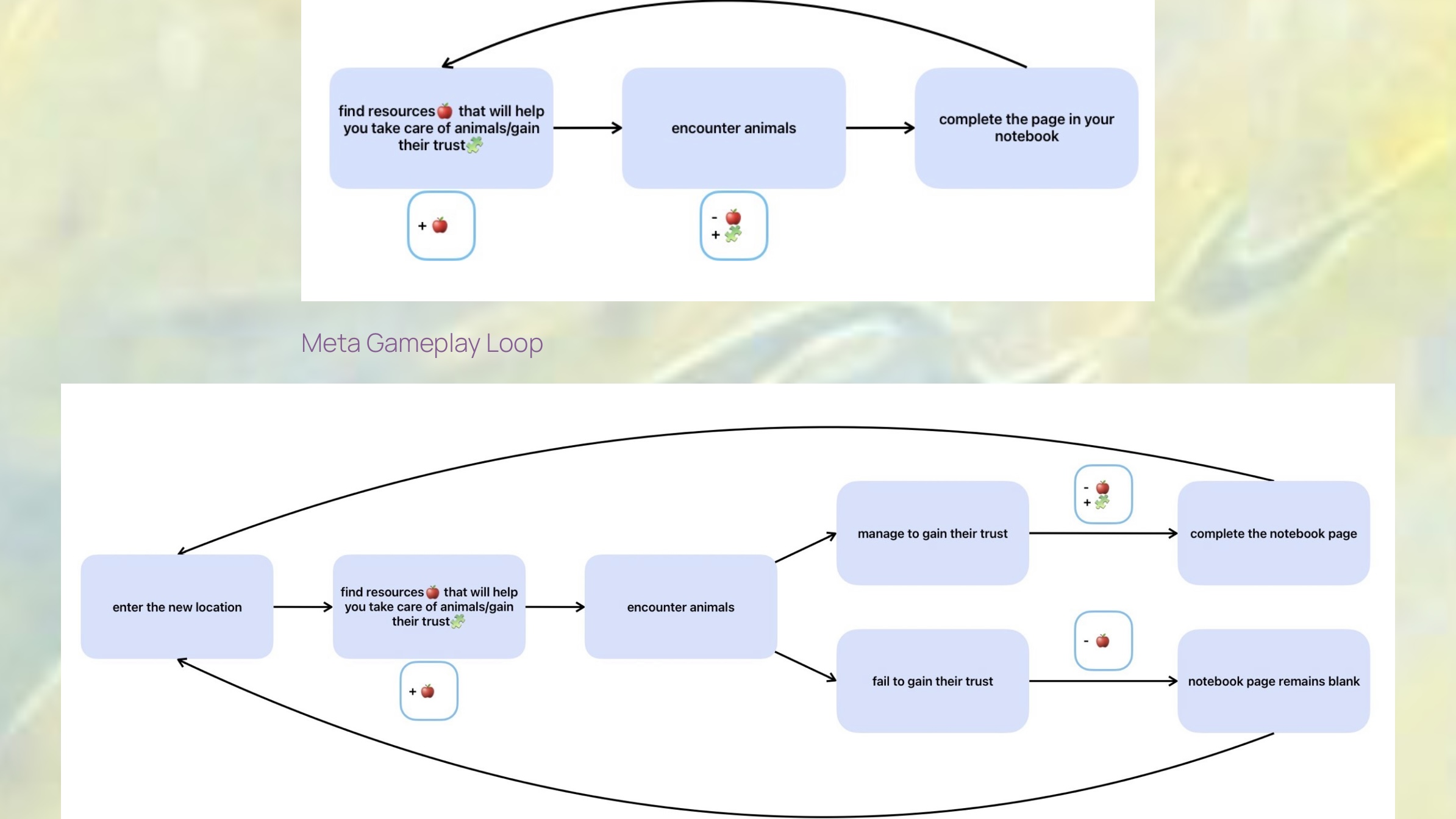
By looking at Elina’s GDD core gameplay blog: Core Gameplay – Elina Orlovska
I analysed the complete and feasible game loop based on her prototype.
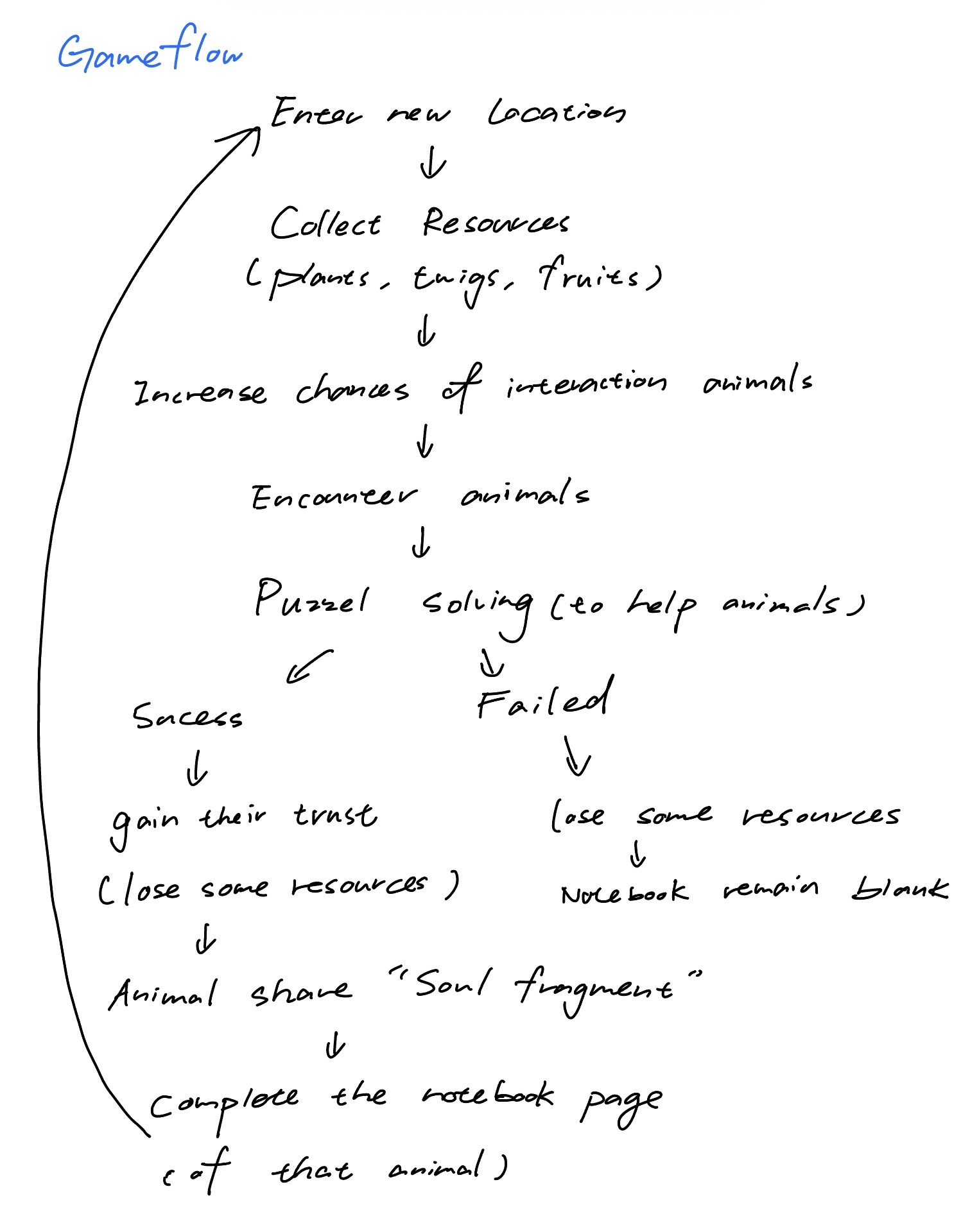
This game loop serves as a core development guideline throughout the entire development process. As the mechanic designer, it allows me to clearly identify which gameplay systems need to be implemented in Unity in order to support this loop.
Gameplay system
1. Player Movement System
A responsive character controller that supports exploration across different locations, including movement, interaction triggers, and potential environmental constraints.
2. Resource Collection System
A system that allows players to collect environmental resources (plants, twigs, fruits, etc.), including:
Trigger detection
Interaction prompts
Inventory updates
Resource consumption logic
3. Data & Progression System
A structured backend system to:
Track collected resources
Record animal trust levels
Store acquired “Soul Fragments”
Manage notebook completion status.
This may require ScriptableObjects or a centralised game manager for state persistence.
4. Animal NPC AI & Navigation System
Animals must:
Navigate the environment using AI (NavMesh or custom pathfinding)
Trigger encounters dynamically
React to player proximity or interaction states
5. Puzzle System
A modular puzzle framework that:
Initiates when interacting with animals
Determines success or failure conditions
Applies consequences (resource loss or trust gain)
Connects directly to the progression system
6. Trust & Reward System
On puzzle success:
Increase animal trust
Consume required resources
Unlock a “Soul Fragment”
Update the corresponding notebook page.
On failure:
Deduct resources
Keep notebook entry incomplete.
Potentially reduce interaction chances
7. UI System
Including:
Interaction prompts (e.g., “Press F to interact”)
Inventory display
Notebook interface
Feedback for puzzle results
Resource change indicators
Leave a Reply to Week 1 – Misty Zhang Cancel reply