Day of the Dead
Time:
1st and 2nd of November each year
Region of origin of the festival:
Mexico
Festivals Prevalent Areas:
Mexico
Story about festivals:
On the Day of the Dead the spirits of dead family members return to join them. On this day the souls of dead family members meet with them, celebrate, and gather for a meal(Whizar-Lugo, V. and Anestesia En México, J. ,2004).
History and culture of the Day of the Dead:
The origins of the Day of the Dead can be traced back thousands of years to the indigenous peoples of Mesoamerica, particularly the Aztecs, Toltecs, Olmecs and Mayans, who believed that life and death were a cycle. They believed that death was not the end, but a continuation in another realm, and that the souls of the dead were still connected to the living and could return periodically to share the earthly realm.
Day of the Dead customs:

Families will travel to the cemetery to decorate the graves of their loved ones, lighting candles, marigolds and the deceased’s favourite foods in the hope of encouraging their souls to return for a joyful reunion(The Editors of Encyclopedia Britannica ,2019).
- One of the favourite practices of the Day of the Dead is the construction of altars, which may be displayed in the home or beside the grave of a deceased relative. At these sites, family members gather to eat, share stories and lovingly guard the resting place of their ancestors.
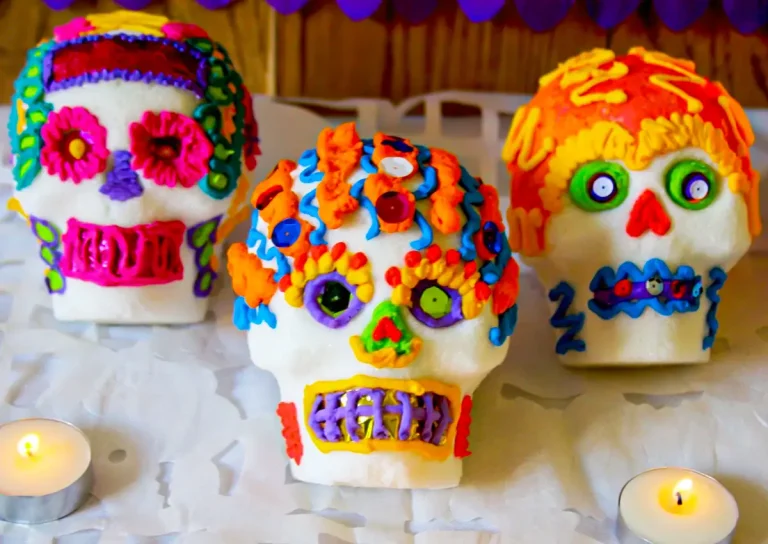
- Purpose is surrounded by calaveras, which are skulls made of compressed sugar and water with the name of the deceased written on the forehead. Calaveras are colourful folk art skulls symbolising the cycle of life, decorated with coloured tinsel, icing, beads, ribbons and feathers(Odekirk, S. ,2019).
- In the Sierra Norte region of Oaxaca, bells are rung on the Day of the Dead, with fast tinkling bells welcoming the souls of deceased children and deeper tones welcoming the souls of adults(Odekirk, S. ,2019).
- People would wear brightly coloured clothes and have their faces painted as skulls dancing to lively music(chtopete ,2025).
How Day of the Dead Traditions link to game decoration part:
- Players need to prepare skull masks. Players draw on the blank masks. Used when celebrating festivals.
- Players need to be prepared to wait for the sugar skulls to be made and then decorate them around the community.
- Players need to pick marigolds and use them to decorate the community.
- Players need to prepare candles and decorate the community to ensure that they can be lit at night.
- Players will need to place the bell in the centre of the community where it can be rung at the start of the feast.
The atmosphere needed after decorating in the game:


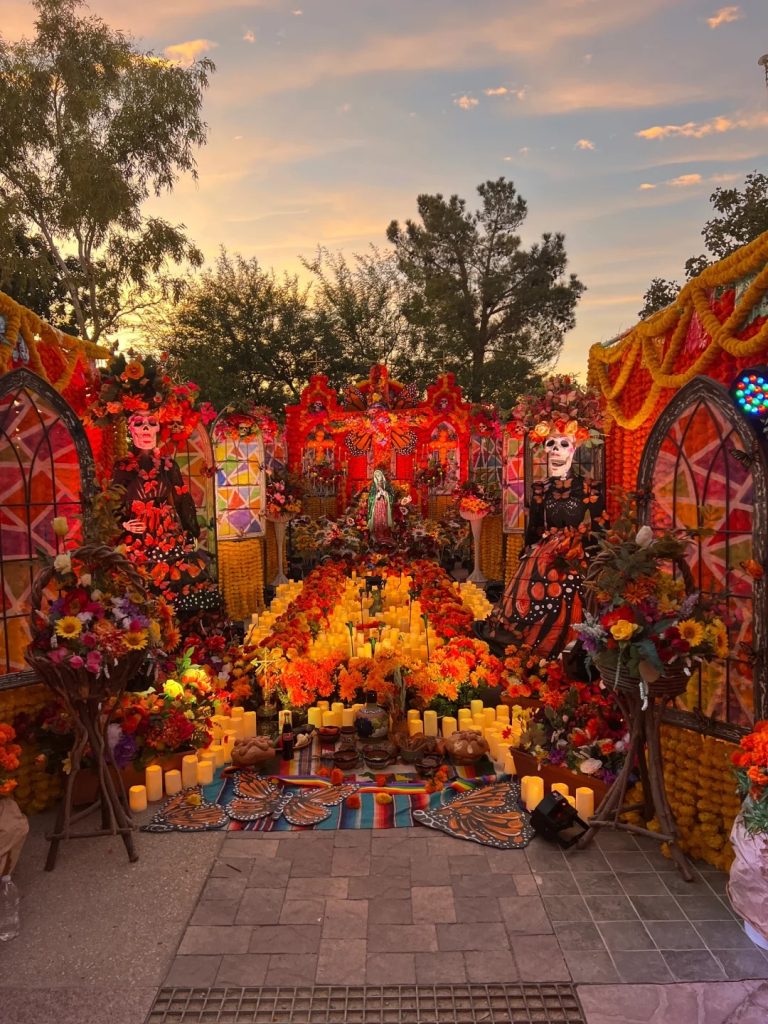
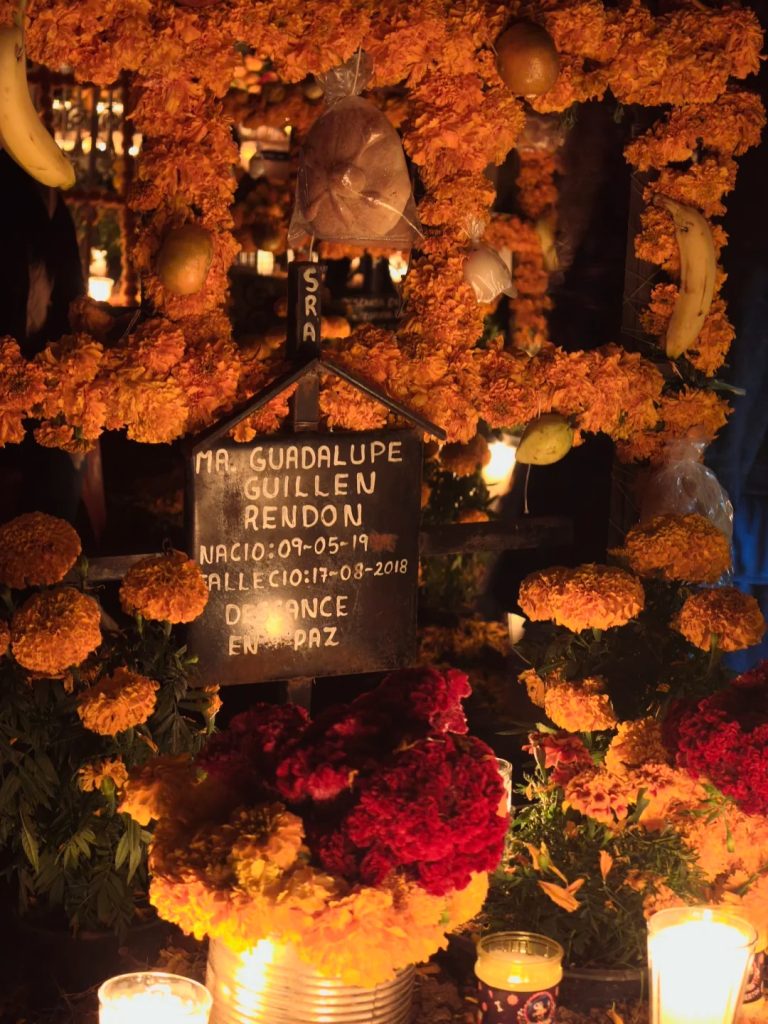
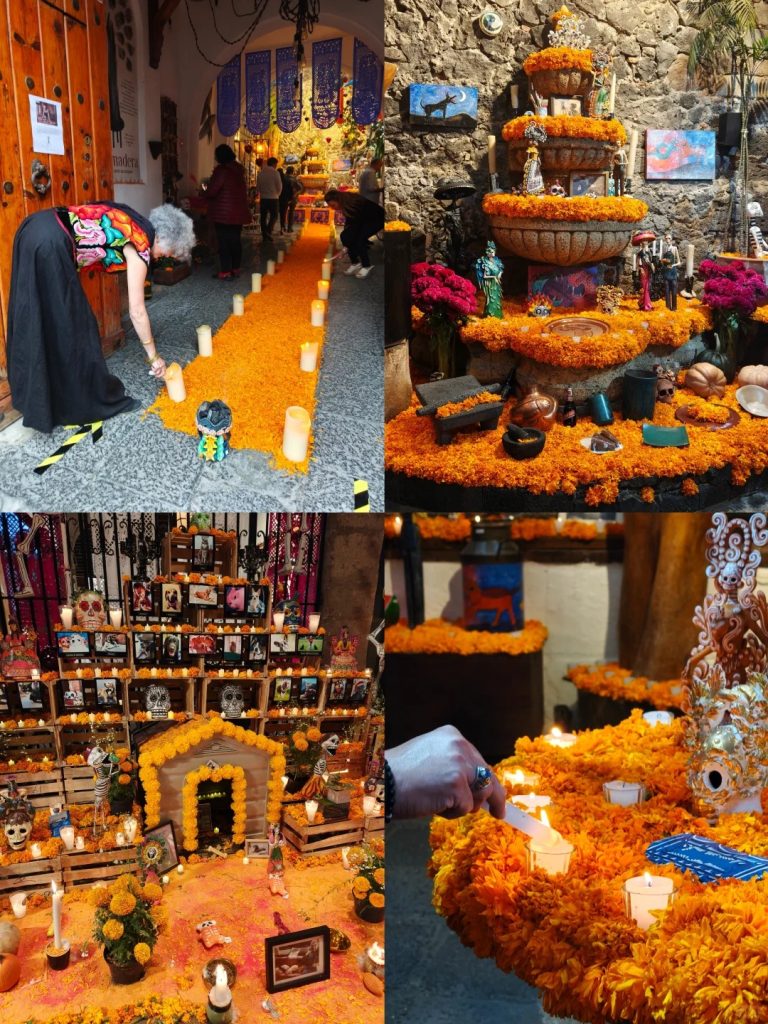
Traditional Day of the Dead food:
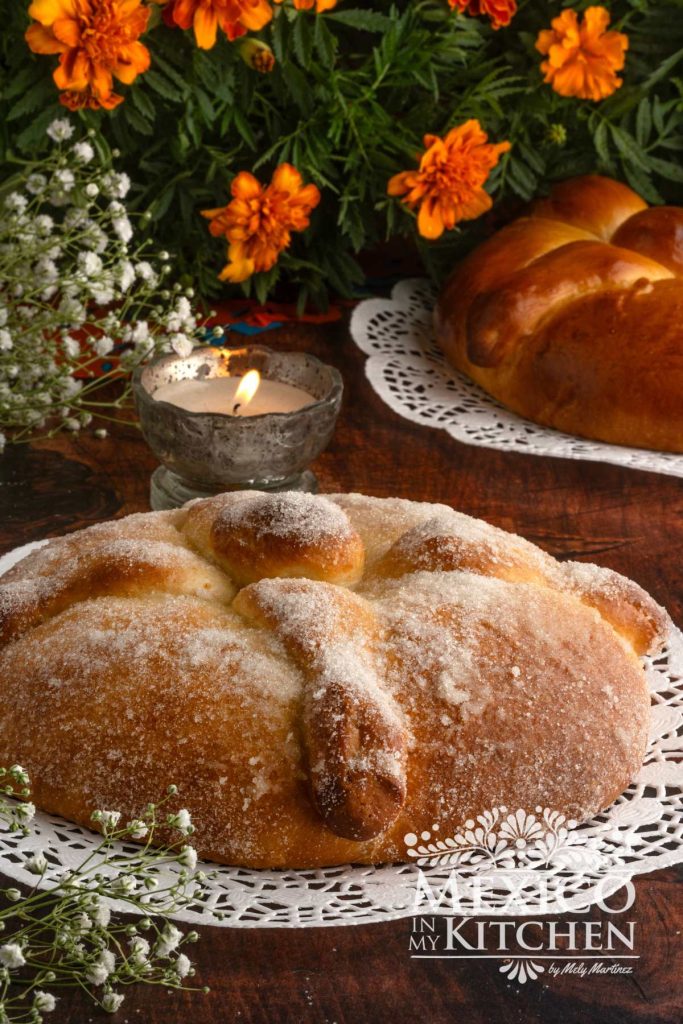
Name:Pan Dulce
Pan Dulce symbolises the cycle of life and death. It is flavoured with orange peel shavings or anise seeds and the top is covered with icing or sugar. The top is shaped like a ‘bone’ and the centre is a ‘skull’(Day of the Dead. ,n.d.).
Name: Calaveras de Azúcar
Calaveras de Azúcar are one of the most iconic symbols of the Day of the Dead. These brightly coloured skeletons, made of sugar and often decorated with coloured icing and edible glitter, are placed on altars to honour the souls of the departed. The skulls symbolise life and death, reminding the living of the fragility of life while celebrating the cycle of existence(Team, L. ,2025).
Name: Tamales
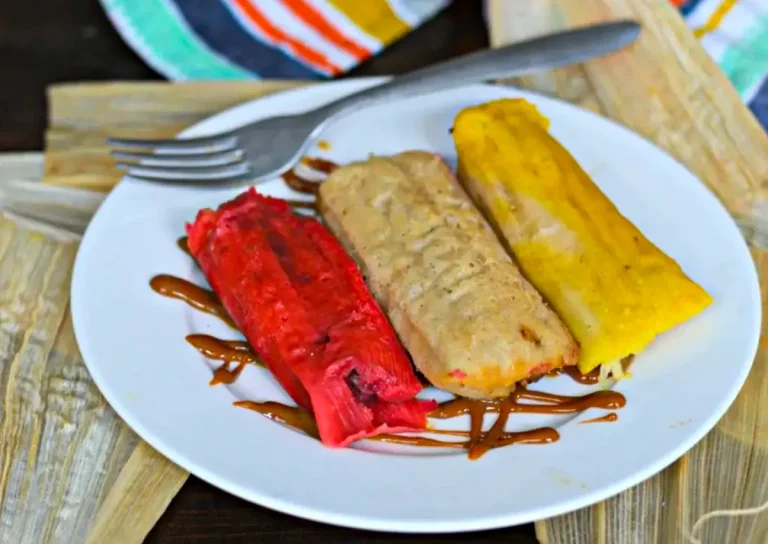
Tamales are one of the most popular foods on the Day of the Dead, both during the celebrations and during the week.It symbolises comfort and nourishment for the souls of the departed. They are sometimes placed on altars as offerings, symbolising love and care for those still living(Team, L. ,2025).
Dishes preparation process:
Pan Dulce:
Warm water and yeast mix ——> Mix in milk, sugar, eggs, salt and butter ——> Add flour and cinnamon and knead to form a dough ——> Let the dough rise until doubled in size ——> Mix butter with cinnamon, flour and icing sugar ——> Flatten the mixture and place on top of the dough ——> Let the dough rise until it doubles in size ——> Bake in the oven at 180 degrees for twenty minutes
Calaveras de Azúcar:
Mix sugar, meringue powder and water ——> Mixed into the texture of wet sand ——> Press the mixture into the skull mould ——> They dry naturally for 8 hours until they are as hard as stone
Tamales:
Soften corn leaves in warm water ——> Mix the cornflour, eggs, corn kernels and sugar ——> Pour in the water and butter and mix to form a paste ——> Pour the batter over the corn leaves and wrap them around
References:
chtopete (2025). Discover the Rich History of Día de Muertos. [online] ICO Mexico. Available at: https://www.icomexico.com/post/traditions-and-history-behind-d%C3%ADa-de-muertos.
Day of the Dead. (n.d.). 10 Traditions that make up Day of the Dead. [online] Available at: https://dayofthedead.holiday/traditions/10-traditions-that-make-up-day-of-the-dead/.
Odekirk, S. (2019). Day of the Dead Traditions. [online] FamilySearch Blog. Available at: https://www.familysearch.org/en/blog/day-of-the-dead-traditions.
The Editors of Encyclopedia Britannica (2019). Day of the Dead | holiday. In: Encyclopædia Britannica. [online] Available at: https://www.britannica.com/topic/Day-of-the-Dead.
Team, L. (2025). 10 Traditional El Día de los Muertos Foods You Must Try – LFM. [online] Los Foodies Magazine. Available at: https://losfoodiesmagazine.com/el-dia-de-los-muertos-foods/ [Accessed 10 Jan. 2026].
Whizar-Lugo, V. and Anestesia En México, J. (2004). Día de Muertos. Una Festividad Ritual con Tradición Mexicana. [online] 1. Available at: https://www.imageneseducativas.com/wp-content/uploads/2015/10/D%C3%ADa-de-los-Muertos.pdf.
Leave a Reply