Morning Class:
Firstly, I read the material Adam sent us, which mainly explains how to come up with good ideas.
Good design relies not only on technical skill, but on good ideas. And good ideas need to be generated through the right creative process.
Key Opinion:
- Use paper and pen to help design:When creating a design, do not start by using standard software straight away. It is best to think things through on paper, jot down ideas, sketch out concepts and make connections before moving on to the digital production stage. Thinking on paper allows for quick experimentation and revisions.
How to come up with creative ideas:
- Step away from the computer for a moment and work on paper (The aim is to generate new avenues of thought).
- Expose yourself to new books, films, art forms, history, architecture, museums and so on. And seek out new information from a variety of fields.
- Make good use of a sketchbook to jot down or sketch out your ideas; this helps you organise your thoughts and capture sudden flashes of inspiration.
- Diverge before you Converge. First, generate as many different ideas as possible; then look for connections between them; and finally, select the best option.
- Make good use of mind maps. Mind maps not only help you organise information, but can also spark new ideas.
- Team brainstorming can help generate a large number of ideas in a short space of time.
How to do good presentation:
- Images are needed in PowerPoint to illustrate the content, helping the audience to understand it more clearly.
- Avoid adding too much text to your PowerPoint slides, as this can cause the audience to lose interest. You can use the ‘Notes’ feature to help you with your presentation.
- The text size in PowerPoint should be appropriate, ensuring that even audience members sitting furthest away can clearly see the text and images.
- The content in PowerPoint should be clearly categorised so that the audience can understand it more easily in a short space of time.
- Once you have finished creating your PowerPoint presentation, time yourself whilst delivering it to ensure that the presentation stays within the correct time limit.
- Before the formal presentation, you can run through it once in the lecture theatre to ensure everything runs smoothly.
Afternoon Class:
Group Activity:
My three friends (Leo, Iris and Cindy) and I formed a group. We each listed the topics we were interested in. We then chose the topic we were most interested topic (Cooking) to discuss.
Research direction:
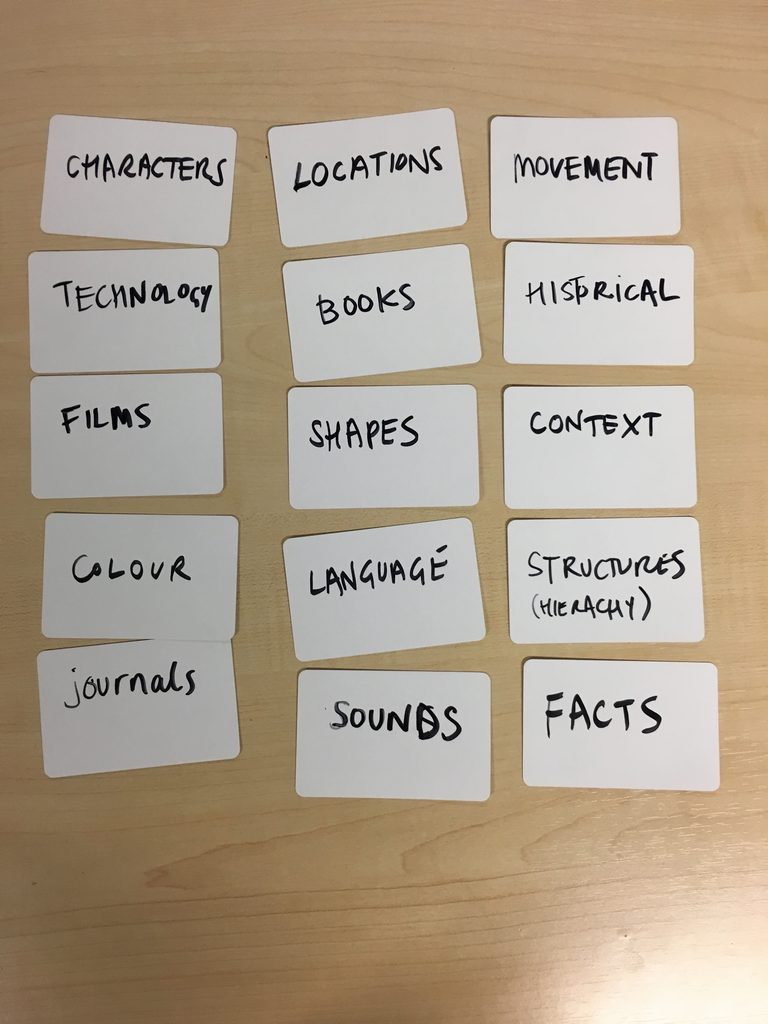
These are the 15 research areas that Adam has suggested to us.
Our Research:
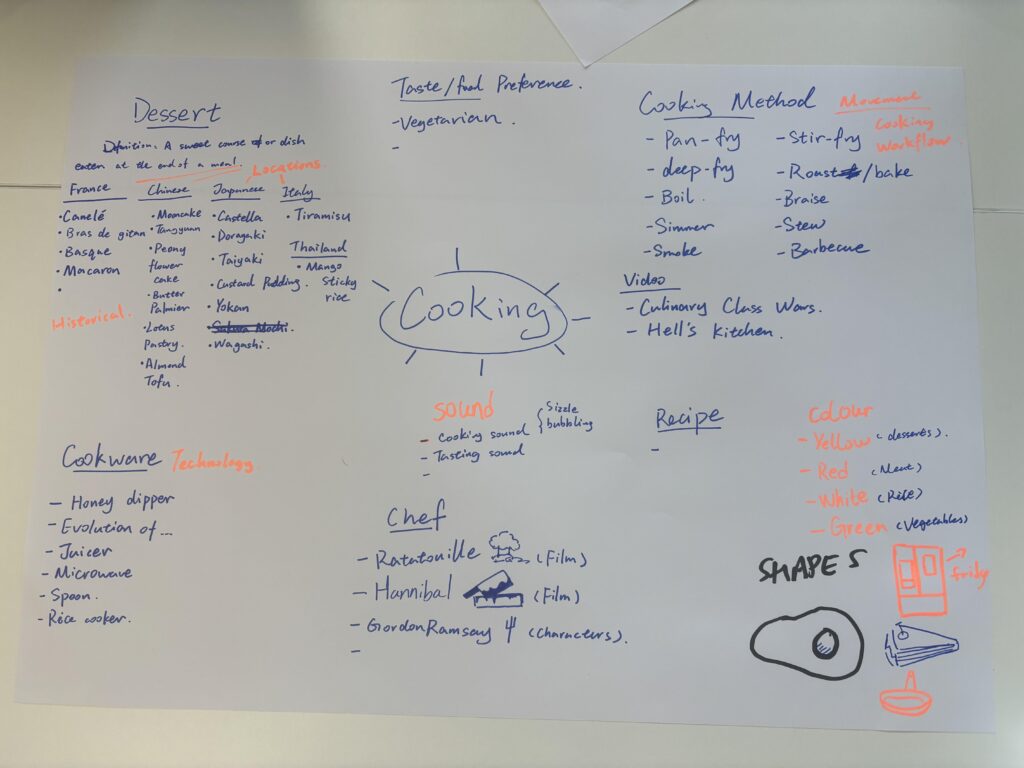
Firstly, rather than conducting our research according to the topics provided by the teacher, we asked each other, ‘When you hear the word “Cooking”, what is the first thing that springs to mind?’. We then listed each of our ideas on a mind map.
Yushan:Cooking method
Cindy:Dessert
Iris:Cookware
Leo:Chef
Then, we carried out some research based on the keywords each of us had mentioned, and supplemented one another’s findings. We organised the results of this research into a mind map.
Dessert:Cindy research different country famous dessert (French, Chinese, Japan, Itaty).
Cooking Method: I research popular cooking method around world (Baking, Deep-frying, Pan-frying, Boil, Steaming…).
Cookware: Iris research some tools (Fork, Spoon, Honey dipper, Microwave…). And she explain some history about these tools.
Chef: Leo didn’t research traditional chef, he looked up some characters in films or TV programmes who could be described as ‘chefs’. We all found his research quite interesting.
Finally, we return to the research directions provided by Adam, linking the keywords we have identified with the directions he has suggested. We will also supplement any areas that we have not yet explored.
Location, History:different countries dessert and different dessert history.
Technology, History: cookware
Movement: cooking method (People’s movement patterns whilst cooking).
Character:Chef(Chef characters in films and books).
Colours: Diiferent food and dessert colours.
Shape:We drew pictures based on the image that came to mind when we heard the word ‘cooking’. Some of these painting depict food, whilst others depict tools.
Sound:Whilst cooking, the food is exposed to the sounds produced by different cooking methods (Zizzle, Bubbling…).
Leave a Reply